

In professional production environments, stage lights do far more than illuminate performers - they define atmosphere, direct attention, and shape the entire audience experience. Whether you're working in a large-scale theatre, a touring arena production, or an outdoor festival setting, lighting is one of the most powerful tools at your disposal.
At this level, stage lights are not simply functional fixtures; they are part of an integrated system where precision, reliability and creative flexibility all matter. From tightly focused key lighting in theatrical productions to expansive, dynamic rigs in live music environments, the right lighting setup can elevate a show from technically competent to genuinely memorable.
Modern professional stage lights, particularly LED stage lights, have transformed what’s possible. Greater control over colour, reduced power consumption, improved fixture lifespan and compact form factors mean designers and engineers can push creative boundaries without compromising on efficiency or scalability.
This guide explores the core types of stage lights used across professional environments, how they function, and how they’re combined to achieve specific visual outcomes. We’ll look at real-world applications across theatres, large venues, touring rigs and festival stages - helping you make informed decisions when specifying or upgrading your lighting system.
Why Stage Lighting Is Critical in Professional Productions
At a professional level, stage lights are fundamental to visual storytelling. Lighting guides the audience’s eye, reinforces mood, and supports the narrative arc of a performance. In theatre, it can subtly shift emotional tone from scene to scene; in live music, it drives energy, accentuates drops, and creates those defining moments that audiences remember long after the show ends.
Equally important is performer visibility and focus control. Professional stage lights allow for precise illumination, ensuring that key performers, speakers or focal points remain clear and prominent, regardless of stage size. Carefully controlled beam angles, intensity and colour help isolate subjects, manage contrast, and maintain clarity even in complex, multi-layered productions.
As venues scale up - from large theatres to arenas and outdoor festivals - lighting becomes essential in establishing presence and atmosphere. Without a well-designed lighting system, even the most impressive stage can feel flat or disconnected. With the right approach, however, lighting adds depth, dimension and cohesion, making vast spaces feel intentional and immersive rather than overwhelming.
Modern productions also rely on lighting as part of a fully synchronised system. Today’s LED stage lights integrate seamlessly with audio, video and staging elements, often controlled through centralised systems that allow for precise timing and coordination. This integration ensures that lighting cues align perfectly with sound design, video content and stage movement, creating a unified and polished production.
Choosing the right combination of stage lights is essential to achieving this level of control, creativity and reliability across any professional environment.
Types of Stage Lights Used in Professional Setups
Wash Lighting – Coverage, Colour and Atmosphere
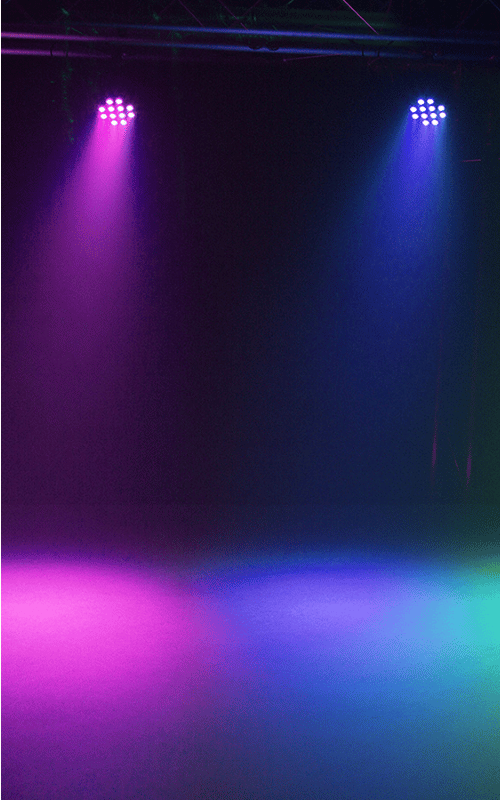
Wash lighting forms the backbone of most professional stage lighting rigs. Designed to deliver broad, even coverage across large areas, wash fixtures are used to create base layers of light that establish mood, colour and spatial definition. Rather than focusing on tight beams or sharp projections, wash lights are all about consistency and blend, making them essential for both subtle theatrical work and high-impact live productions.
Modern LED stage lights in this category typically feature RGBW or RGBA colour mixing, allowing for a huge palette of colours with smooth transitions and accurate rendering. Many fixtures also include motorised zoom functions, giving lighting designers the flexibility to move between wide stage coverage and more controlled washes without changing fixtures. This adaptability is particularly valuable in touring setups where efficiency and versatility are key.
Compared to traditional PAR cans, LED wash lighting offers a significant step forward. You get lower power consumption, reduced heat output, longer fixture lifespan and far greater control over colour and dimming curves. For professional environments, this means more reliable rigs, quicker setup times and fewer compromises when designing complex looks.
In practical terms, wash lighting is used across a wide range of applications. For concerts and touring productions, it provides rich stage colour washes that shift dynamically with the music. In theatre, it helps define scenes, transitions and emotional tone without distracting from the performance. On festival main stages, wash fixtures are often used for powerful backlighting, creating silhouettes, depth and visual scale that translate well to large audiences and camera feeds alike.
Explore suitable fixtures in the wash lighting category to find options designed for demanding professional use.
Moving Head Lights – Dynamic Precision and Impact
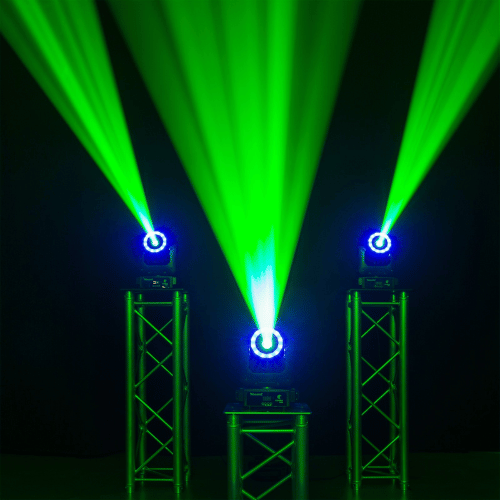
Moving head lights are a staple of modern professional stage lights, bringing motion, versatility and high-impact visuals into a rig. With motorised pan and tilt movement, these fixtures can be precisely controlled via DMX, allowing lighting designers to create fluid, synchronised effects that evolve throughout a performance.
There are three primary types of moving heads: spot, beam and wash. Spot fixtures are designed for sharp projections, gobos and textured effects. Beam lights produce tight, intense shafts of light that cut through haze and atmosphere, making them ideal for aerial effects. Wash moving heads combine movement with broader coverage, offering the flexibility of dynamic colour washes with positioning control.
In practice, moving heads are essential for concerts and touring rigs where adaptability and visual impact are key. They’re widely used in festival headline setups to deliver bold, sweeping effects across large audiences, and they play a central role in high-energy shows where lighting is tightly synced with music and video content.
For a closer look at suitable fixtures, explore the moving heads category.
LED Bar Lights – Linear Effects and Stage Definition
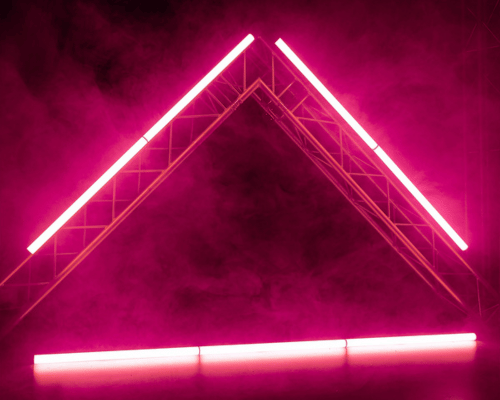
LED bar lights offer a different approach to stage lighting, focusing on linear output and visual structure. These fixtures are particularly effective for creating clean lines of light, whether outlining a stage, defining truss architecture or adding layers of depth to a set design.
Many LED bar lights support pixel mapping, allowing individual sections of the fixture to be controlled independently. This opens up creative options such as chases, gradients and animated effects that can be synchronised across multiple units. Despite their compact form factor, they often deliver surprisingly powerful output, making them suitable for both subtle accents and bold visual statements.
Common use cases include lining stage edges for definition, mounting along trusses to add structure, illuminating backdrops, and highlighting band risers or performance zones. In touring environments, their size and versatility make them a practical addition to rigs where space and setup time are always considerations.
Browse available options in the LED bar lights category.
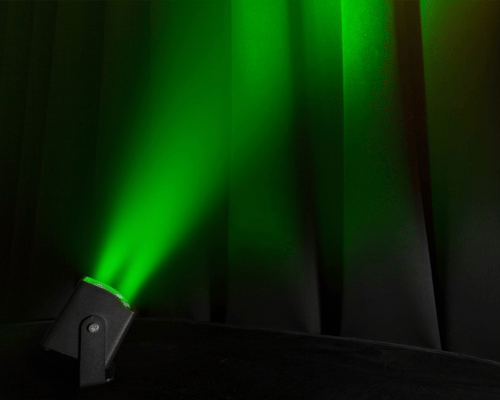
Wireless Uplighters – Flexible Architectural Lighting
Wireless uplighters bring flexibility and speed to lighting design, particularly in venues where running cables is impractical or time-consuming. These battery-powered LED stage lights are designed for quick deployment, allowing crews to position fixtures exactly where they’re needed without being constrained by power distribution.
For professional applications, this flexibility is invaluable. Wireless uplighters can be used to enhance venue architecture, highlight structural features or complement stage lighting with ambient colour. They are especially useful in hybrid environments where stage, audience and venue spaces need to feel visually cohesive.
Typical use cases include venue uplighting for large events, adding depth and colour to theatre set pieces, and supporting corporate productions where speed, cleanliness and adaptability are priorities. Their portability also makes them a strong choice for touring setups that need consistent results across varied locations.
See the full range in the wireless uplighters category.
Laser Lights – High-Impact Visual Effects
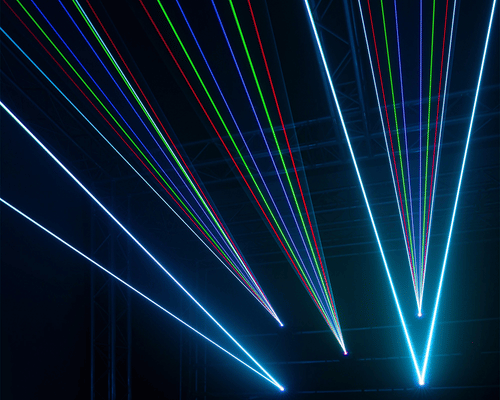
Laser lights are all about intensity and spectacle, producing sharp, coherent beams that create striking aerial effects and geometric patterns. In large-scale productions, they’re often used to add a layer of visual impact that traditional lighting can’t replicate, particularly when combined with haze or atmospheric effects.
For professional users, safety is a critical consideration. Laser systems must be specified, installed and operated in line with regulations, including appropriate audience scanning limits, safety zones and control systems. When used correctly, however, they offer a powerful addition to any high-end lighting rig.
Laser lights are most commonly seen in festivals, arena shows and electronic music events, where their precision and brightness can fill large spaces with dynamic visuals. They’re also used in large-scale productions where bold, memorable effects are a key part of the overall design.
Explore professional options in the laser lights category.
Theatre Lighting – Precision and Control
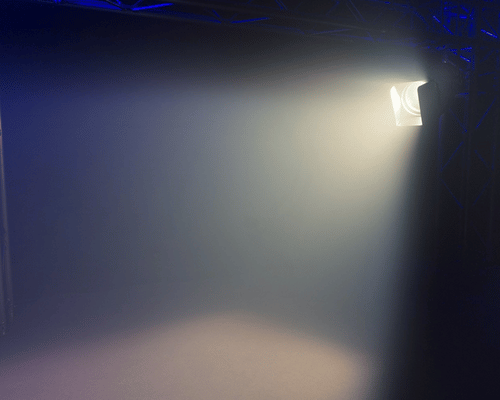
Theatre lighting focuses on control, consistency and accurate beam shaping. Unlike more dynamic concert lighting, these fixtures are designed to deliver repeatable, precise results that support performance without distraction.
Common types include Fresnels, which provide soft-edged washes with smooth fall-off; profile lights (ellipsoidals), which allow for sharp beam shaping, shuttering and gobo projection; and follow spots, used to track performers across the stage with consistent intensity and focus.
These fixtures are essential in drama and theatre productions, where lighting must reinforce narrative without overwhelming it. They are equally important in opera and classical performances, where clarity, subtlety and balance are critical. In controlled stage environments, theatre lighting provides the foundation for disciplined, intentional design.
View suitable fixtures in the theatre lighting category.
How Professional Stage Lights Work
Understanding how professional stage lights function at a technical level is what allows lighting engineers to move from simply operating fixtures to fully exploiting their capabilities. Modern systems are built around efficient light sources, advanced control protocols and highly refined optics, all working together to deliver precision and consistency across demanding environments.
The most significant shift in recent years has been the move from traditional discharge lamps to LED stage lights. Discharge fixtures, such as metal halide or arc lamps, were once the standard for high-output applications, offering strong intensity but with drawbacks including heat generation, higher power consumption and limited colour flexibility. In contrast, LED technology provides instant output, significantly improved energy efficiency and far greater control over colour without the need for physical gels or colour wheels.
For professional setups, LEDs also offer improved longevity and reliability - a key consideration for touring productions and fixed installations alike. This is where suppliers like Stage Concepts play a crucial role, offering modern, efficient LED stage lights designed to meet the demands of high-performance environments.
Control is handled primarily through DMX512, the industry-standard protocol that allows lighting desks to communicate with fixtures. Each light is assigned a DMX address, enabling precise control over parameters such as intensity, colour, pan, tilt and effects. For larger and more complex rigs, network-based protocols like Art-Net and sACN are used to distribute control data over Ethernet, allowing thousands of channels to be managed reliably across expansive systems.
Dimming and colour mixing are also central to how stage lights behave. High-quality fixtures offer selectable dimming curves, ensuring fades appear smooth and natural, whether in a theatrical blackout or a subtle transition between cues. With RGBW or RGBA LED engines, colour mixing becomes far more flexible, allowing designers to dial in anything from saturated concert looks to accurate whites for broadcast and theatre applications.
Optics are what shape and direct the light itself. Lenses determine beam angles and field distribution, while motorised zoom systems allow fixtures to adapt on the fly. Gobos - patterned inserts within the light path - enable projection of textures, shapes and branding elements, particularly in spot fixtures. Beam angles, focus controls and edge softness all contribute to how light interacts with the stage, performers and set.
When these elements are combined - efficient LED sources, robust control systems and precision optics - professional stage lights become highly adaptable tools capable of delivering everything from subtle theatrical nuance to large-scale visual impact.
Combining Stage Lights for Professional Effects
Specifying the right types of stage lights is only part of the equation. What separates a functional rig from a truly compelling one is how those fixtures are combined. Professional lighting design is about layering, contrast and movement - building looks that feel intentional, dynamic and appropriate to the performance.
Layered Lighting Design
At the core of any effective setup is a layered approach. Each layer serves a distinct purpose, and when balanced correctly, they create depth, clarity and visual interest across the stage.
Front light is responsible for visibility. Typically delivered via profiles or Fresnels, it ensures performers are clearly seen, with accurate colour rendering and controlled intensity. Without it, even the most elaborate rig can feel disconnected.
Backlight introduces depth and separation. Positioned behind performers, it creates silhouettes and highlights edges, helping subjects stand out from the background. In larger venues, this becomes essential for maintaining definition across distance.
Side lighting adds dimension. Often used in theatre and dance, it sculpts the body and emphasises movement, giving a more three-dimensional feel to the stage picture. Combined, these layers form the visual foundation of professional stage lighting.
Creating Atmosphere with Wash + Effects
Once the base layers are established, atmosphere is built by combining wash lighting with more dynamic fixtures. Wash lights provide the underlying colour and tone, setting the emotional context of a scene or track.
Moving heads then add motion and variation. Whether it’s slow, sweeping transitions or sharp, rhythmic cues, they bring energy and adaptability to the rig. This is particularly effective in live music environments where lighting needs to respond to tempo and structure.
LED bar lights contribute accents and structure. Used for chases, pixel effects or stage outlining, they help define the space and add visual rhythm without overwhelming the overall look. Together, these elements create a balanced system where each fixture type plays a clear role.
High-Energy Concert & Festival Setups
In large-scale concert and festival environments, lighting design shifts towards impact and scale. Moving heads, laser lights and strobes are combined to produce bold, high-energy visuals that can carry across vast audiences.
These setups rely heavily on fast, precise programming. Lighting cues are tightly synchronised with audio and video systems, creating moments that feel cohesive rather than chaotic. The goal is not just brightness, but timing - hits, sweeps and transitions that align perfectly with the performance.
For touring productions, this also means building rigs that are repeatable and efficient, capable of delivering the same level of impact night after night in different venues.
Theatre & Controlled Environments
In contrast, theatre and other controlled environments prioritise precision and subtlety. Profile fixtures are used for accurate spotlighting, allowing designers to shape beams and isolate specific areas of the stage.
Fresnels provide soft-edged washes that blend seamlessly, supporting naturalistic lighting states without harsh transitions. These are often layered carefully to maintain consistency across scenes.
Colour transitions tend to be more restrained, with gradual shifts that support the narrative rather than dominate it. In these settings, the effectiveness of the lighting often lies in what isn’t immediately obvious - a controlled, disciplined approach that enhances the performance without drawing attention away from it.
Choosing the Right Stage Lighting Setup
Selecting the right stage lighting setup at a professional level comes down to more than just fixture choice - it’s about building a system that fits the venue, supports the production style and holds up under real-world demands. For venue owners and production teams, that means balancing performance, flexibility and long-term reliability.
Venue size and rigging options are the starting point. A large theatre or arena requires fixtures with the output and throw to cover distance effectively, along with rigging solutions that can support complex overhead designs. In contrast, more compact venues may prioritise versatility and multi-function fixtures that can deliver a range of looks without excessive infrastructure.
The distinction between touring and permanent installation is equally important. Touring rigs need to be efficient, durable and quick to deploy, with fixtures that can handle repeated transport and varying environments. Weight, flight cases and setup time all become critical factors. Permanent installations, on the other hand, can focus more on integration, consistency and ease of control for in-house teams.
Power requirements should never be an afterthought. Modern LED stage lights have made it far easier to deliver high output with lower consumption, but system-wide planning is still essential. Understanding load distribution, available circuits and redundancy ensures that your rig performs reliably under pressure.
Control system compatibility is another key consideration. Whether you're running a dedicated lighting console or integrating into a wider production network, your fixtures need to support standard protocols like DMX, Art-Net or sACN. A well-matched system allows for smoother programming, better scalability and fewer headaches during live operation.
Durability also plays a major role, particularly for professional stage lights used in touring and festival environments. Fixtures must withstand transport, frequent rigging and varying conditions without compromising performance. Build quality, cooling systems and component reliability all factor into long-term value.
For teams looking to build or upgrade their setup, working with an experienced supplier makes a tangible difference. Stage Concepts offers scalable, professional lighting systems tailored to venues, touring productions and large-scale events - helping ensure that every element of your rig is fit for purpose, from initial specification through to deployment.
Why LED Stage Lights Dominate Modern Productions
LED stage lights have become the default choice across professional productions, and for good reason. Advances in LED technology have addressed many of the limitations associated with traditional lighting sources, offering a combination of efficiency, flexibility and reliability that aligns perfectly with the demands of modern venues and touring rigs.
One of the most immediate advantages is energy efficiency. LED stage lights consume significantly less power than older discharge or halogen fixtures, allowing larger rigs to run on more manageable power distributions. For venues and production teams, this translates into reduced operating costs and greater flexibility when planning system layouts.
Reduced heat output is another major benefit. Traditional fixtures can generate substantial heat, impacting both performer comfort and overall stage conditions. LED fixtures run considerably cooler, making them better suited to enclosed theatre environments, tightly packed rigs and long-duration events where temperature management becomes critical.
Lifespan is equally important in professional settings. LED stage lights are built to last, with far longer operational hours compared to traditional lamps. This reduces maintenance requirements, minimises downtime and ensures more consistent performance over time - particularly valuable for touring productions and permanent installations alike.
Perhaps the most transformative feature is instant colour mixing. With RGBW or RGBA systems, LED stage lights can produce a wide spectrum of colours without the need for gels or mechanical colour wheels. This allows for faster programming, smoother transitions and greater creative control, whether you're building subtle theatrical cues or bold, high-impact concert looks.
For professional users, these advantages make LED stage lights not just an upgrade, but a fundamental shift in how lighting systems are designed and operated. They offer the performance expected at the highest level, while improving efficiency and expanding creative possibilities across every type of production.
Building a Future-Proof Lighting Rig
Investing in professional stage lights isn’t just about meeting current production needs - it’s about building a system that can evolve. As technology and audience expectations continue to shift, lighting rigs need to be adaptable, scalable and ready to integrate with wider production workflows.
Scalability is a key consideration. Whether expanding a venue’s in-house rig or developing a touring package, your system should allow for additional fixtures, increased control channels and more complex designs without requiring a complete overhaul. Modular approaches, particularly with LED stage lights, make it easier to grow your setup in stages.
Wireless integration is becoming increasingly relevant, especially in environments where flexibility and speed are priorities. Wireless DMX and battery-powered fixtures, such as uplighters, reduce cabling complexity and open up new creative possibilities in both stage and architectural lighting.
Software-driven lighting design is also shaping modern workflows. Advanced control systems, visualisers and pre-programming tools allow designers to build and refine shows before stepping into the venue. This not only improves efficiency on-site but also enables tighter integration with audio and video systems.
Hybrid events - combining live audiences with broadcast or streamed content - add another layer of complexity. Lighting must now work for both in-person viewing and cameras, requiring careful attention to colour temperature, consistency and flicker-free performance. A future-proof rig takes these dual requirements into account from the outset.
Professional Stage Lighting Solutions from Stage Concepts
For those specifying or upgrading professional stage lights, having access to the right equipment - and the right guidance - makes all the difference. Stage Concepts offers a comprehensive range of solutions designed for theatres, large venues, touring productions and festival environments.
The product range covers all key categories, from versatile wash lighting for consistent stage coverage, to high-performance moving heads for dynamic effects. Linear fixtures such as LED bar lights add structure and visual detail, while wireless uplighters provide flexible, cable-free solutions for both stage and venue lighting.
For more controlled environments, the theatre lighting range delivers the precision and reliability required for drama, opera and broadcast applications. Across all categories, the focus remains on professional-grade equipment that performs consistently under demanding conditions.
Whether you’re building a new rig from the ground up or refining an existing system, Stage Concepts provides the tools to create lighting setups that are not only technically robust, but also creatively capable - ready to meet the expectations of modern productions at any scale.
Conclusion: Designing Impactful Stage Lighting Systems
Designing effective lighting for professional environments is ultimately about balance - combining different types of stage lights in a way that delivers both technical precision and creative impact. No single fixture can do everything. It’s the interaction between wash lighting, moving heads, LED bars, theatre fixtures and effects that creates depth, clarity and energy on stage.
At a professional level, expectations are high. Lighting systems need to be reliable, adaptable and capable of performing consistently across a wide range of productions - from tightly controlled theatre shows to large-scale touring and festival environments. That means choosing equipment that not only meets the immediate brief, but also integrates seamlessly into wider production systems and workflows.
With modern LED stage lights and advanced control technologies, the possibilities for design are greater than ever. The challenge - and opportunity - lies in using those tools effectively, building rigs that enhance performance, support storytelling and deliver a memorable experience for every audience.
To explore a full range of professional stage lights and build a system tailored to your needs, visit Stage Concepts and discover solutions designed for today’s demanding production environments.
