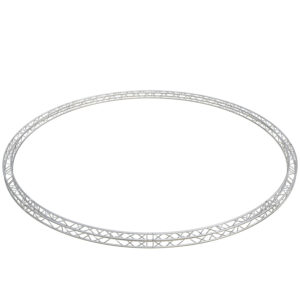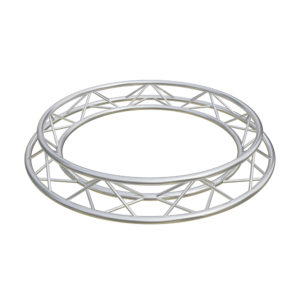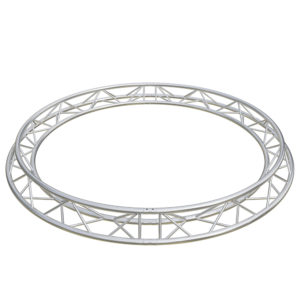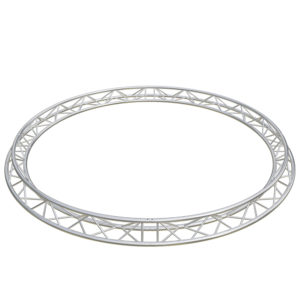
Circular Truss Systems
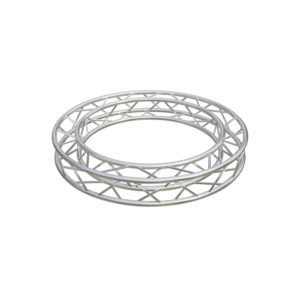
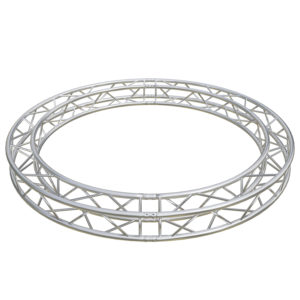
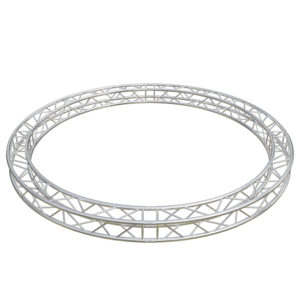
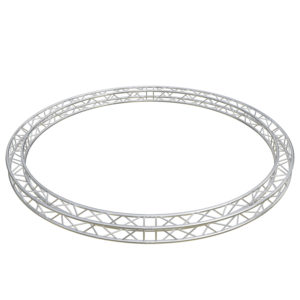
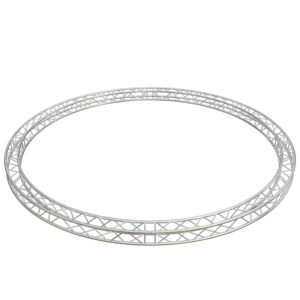
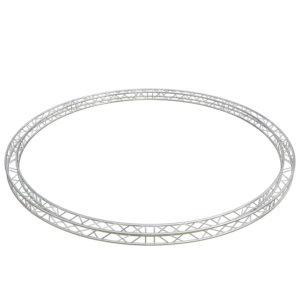
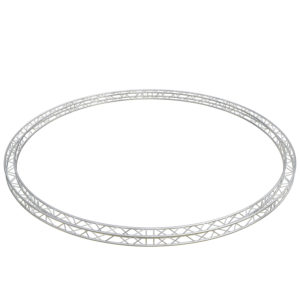
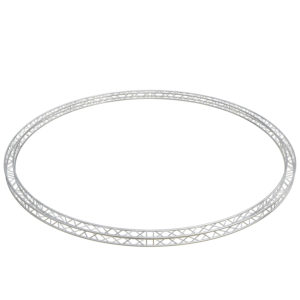
Circular truss systems fill a very specific niche: they bring sweeping curves and perfect rings to structures that would otherwise rely on straight lines. Whether the goal is an eye-catching feature above a stage, a hanging framework in a shopping atrium, or an architectural centrepiece, curved profiles introduce flow and symmetry that flat runs cannot achieve. The following overview explores practical considerations, design variations, and day-to-day benefits associated with curved truss, radius truss, round truss, and circular lighting truss arrangements.
Re-thinking Shape and Structure
Traditional gridwork excels at rectangular layouts; however, many venues ask for something more fluid. Curved segments answer that call. Each arc is manufactured to tight tolerances, allowing several pieces to interlock cleanly and form complete circles or gentle sweeps. Diameters may range from compact two-metre rings to spans that cover an entire auditorium ceiling. Once connected, the geometry offers inherent stability without demanding elaborate bracing, which saves time during build and strike.
Key Design Points
- Segments cut to quarter, half, three-quarter, or full circle increments.
- Radius options produced in regular steps or to a bespoke measurement.
- Precision spigot or conical connectors keep joints flush and secure.
- Metal alloy construction with high strength-to-weight ratio.
- Powder-coated or anodised finishes available for brand alignment.
Why Curved Truss Works
A smooth arc can draw the eye toward a performance area, frame an exhibit, or guide footfall around a retail display. Lighting technicians appreciate the 360-degree mounting plane; sound engineers gain evenly distributed hanging points for line arrays; designers enjoy uninterrupted sightlines. Beyond aesthetics, the circular shape spreads loads evenly across the circumference, reducing point stress compared with long straight runs subjected to the same payload.
Common Installations
Round truss appears in diverse settings, illustrating its adaptability:
- Theatre and live music – over-stage hoops supporting moving lights, effect projectors, and drops.
- Exhibition halls – island stands that demand a strong overhead statement while remaining open on all sides.
- Retail environments – floating feature rings that carry ambient lighting or illuminated signage.
- Sporting venues – scoreboards or video cubes hung from a concentric frame above the action.
- Architectural accents – permanent lobby sculptures integrating lighting round truss for atmosphere.
Lighting Round Truss Focus
Even illumination across a stage or dancefloor often means multiple fixtures working in harmony. A circular lighting truss places lamps at measured intervals around a continuous loop, yielding balanced coverage without dead spots. Designers can assign wash units, beams, or strobes at any angle, then run cabling neatly along the inner chord to keep everything tidy. Because the stage light load hangs equidistant from the centre, motor points or chain hoists carry a predictable share, simplifying rigging calculations.
Advantages in Lighting Applications
- Uniform fixture spacing for symmetrical looks.
- Easy orientation of moving heads for smooth pan and tilt sweeps.
- Internal cable routing keeps power and data lines hidden.
- Fast reconfiguration between shows—swap lenses or add scenic pieces without disturbing the ring itself.
Choosing a Radius
Selecting the correct radius truss hinges on a few straightforward parameters. First, measure the area that the circle must encompass or outline. Next, determine the weight of any equipment that will suspend from the arc. Finally, consider trim height and available hoist capacity. Smaller diameters suit low ceilings and compact displays, while larger spans shine in arenas and outdoor pavilions. Always refer to load tables published by the chosen manufacturer, as slight profile changes can influence capacity.
Finishes and Custom Options
A standard polished metal look complements most technical rigs, yet certain projects call for colour. Modern surface treatments permit almost any RAL shade, matte, satin, or gloss. Additionally, custom connectors can be specified when integration with legacy stock is necessary. Requests sometimes extend to curved ladder inserts, concealed wiring channels, or branded infills. Fabrication lead time depends on complexity, so early dialogue with the technical team is advised.
Assembly Workflow
Even sizeable circles can be handled by a small crew when broken into manageable arcs. Typical steps:
- Lay segments on a clean floor, joining one after another until the ring closes.
- Insert all locking pins and safety clips; torque to the recommendation supplied by the factory.
- Fit lifting slings or shackles at pre-drilled points around the frame.
- Connect hoists, raise the structure to working height, and level using trim chains.
- Add fixtures, route cabling, perform a final safety inspection, and continue the lift to show position.
Handling and Storage
Because arcs are shorter than full straights of the same diameter, they fit neatly on pallets or into purpose-built flight cases. Protective foam or timber inserts prevent scratches, especially important when the truss carries a coloured finish. Staff should avoid dropping or dragging segments, as minor dents can mis-align connectors and create gaps once assembled.
Future Expansion
Events evolve, and so do rigging requirements. Circular systems may be extended through connecting plates that link to fresh arcs or straight pieces. This phased approach spreads cost while maintaining visual continuity across successive projects. When systems retire from touring work, they often find new life in semi-permanent displays or rehearsal studios, illustrating their long service potential.