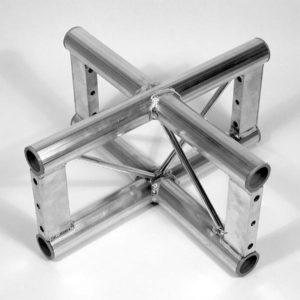
SC Pro SS Ladder Trussing
SC Pro SS Ladder Trussing provides a slim, ladder-style framework that answers the everyday suspension and support demands found in smaller venues, exhibition halls, and touring productions. Manufactured with tight dimensional tolerances, each section locks together through a familiar spigot and pin method, producing a rigid span while keeping overall weight low. The result is a system that installs rapidly, adapts to changing layouts, and can be transported without specialist handling equipment.
Compact Structural Solution
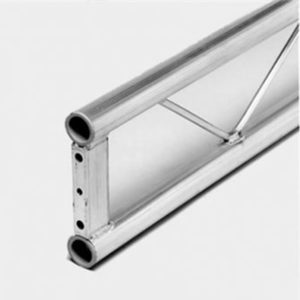
The defining feature of this series is the two-chord ladder profile. Parallel rails form the main load path, while regularly spaced cross members prevent twist and side flex. The geometry favours short to medium spans where ceiling height is limited or sightlines must remain clear. Thanks to its shallow depth, fixtures can sit close to the structure, making it a popular choice for retail displays, gallery lighting, and conference sets.
Component Range
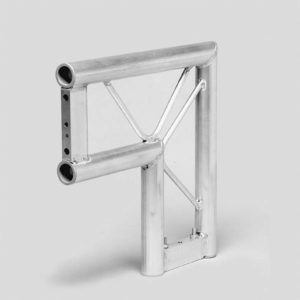
Stage Concepts keeps an extensive inventory of straight lengths, angles, and multi-way junctions within the SC Pro SS line. This breadth of choice makes it straightforward to link simple runs into more involved shapes. Typical catalogue items include:
- Straight beams from 0.5m up to 4m
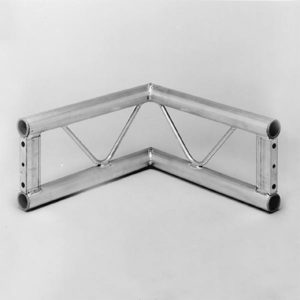
- 90-degree corners for rectangular frames
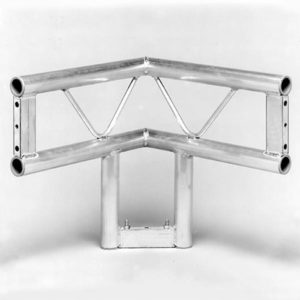
- 2-way and 3-way T-sections for branching grids
- 4-way crosses for central nodes
- Base plates, wall brackets, and ceiling drops
- Dedicated connector kits complete with pins and safety clips
All parts share the same chord spacing and joint style, so sections from different batches remain compatible year after year. That interchangeability protects investment and simplifies future expansion.
Application Scenarios
The adaptability of the ladder profile keeps it visible across a wide spectrum of projects. Common examples include:
- Theatre grid work over compact stages
- Exhibition booth lighting tracks
- Retail banner supports in shopping centres
- Conference backdrops with integrated screens
- Touring band signage frames
- Art installations requiring discreet suspension
- Temporary directional signage at public events
In each case, the shallow depth reduces visual impact while the uniform connector system shortens build time, an important factor when turnover between events is tight.
Integration and Compatibility
The framework relies on a standardised conical spigot secured by tapered pins. This approach keeps joints flush, removes the need for specialised machinery, and guarantees repeatable strength across multiple assemblies. A broad selection of clamps will mate directly with the chords, permitting secure attachment of lanterns, projectors, graphics panels, or acoustic treatment. Where the ladder structure must interface with different support types, adaptors are available, ensuring continuity without resorting to bespoke metalwork on site.
Storage, Transport, and Handling
The slim profile offers a clear advantage once the event is over. Sections nest neatly, minimising space in flight cases or racking. Weight per metre stays low, so most pieces can be handled by a single technician, reducing labour demand. For hire companies, this translates into faster turn-rounds, fewer transport runs, and reduced handling damage.
Maintenance Guidelines
Keeping the framework in serviceable condition revolves around routine inspection and careful handling:
- Visually check chord ends for burrs or ovalisation after every strike.
- Confirm that spigots remain straight and that retaining pins seat fully.
- Clean using mild detergent; avoid corrosive solvents.
- Store indoors on padded racks to prevent scuffs.
- Record any impact damage and remove affected parts pending assessment.
These simple steps preserve joint integrity and extend overall lifespan, particularly in rental fleets where the framework cycles through many hands.
Selecting the Right Sections
Choosing suitable parts is easier when key project parameters are clear. Points routinely reviewed by designers include:
- Maximum clear span between supports
- Cumulative weight of luminaires, screens, or banners
- Available attachment points in the venue ceiling or ground base
- Frequency of build and strike, informing wear considerations
- Transport restrictions such as case length or vehicle size
Armed with this information, technicians can balance safety margin, budget, and logistical convenience before committing to a purchase or dry-hire package.
Custom Fabrication Options
While the catalogue addresses most layouts, some venues demand non-standard spans, custom interface plates, or themed finishes. Stage Concepts works with partner workshops able to cut, weld, and coat bespoke sections to precise drawings. Lead times depend on complexity and current production schedules, yet the service often proves more economical than altering venue infrastructure or compromising on design intent.