Truss Systems for Stage, Touring, and Exhibition Projects
Stage production, live music, broadcast work, and commercial displays all lean on sturdy frameworks. A well-planned truss frame supports lights, screens, audio clusters, banners, and scenery without stealing attention from the performance itself. Designers look for components that go together quickly, travel well, and accept constantly changing loads. That demand explains the long-standing popularity of modular truss systems.
Core Principles Behind a Modern Truss Frame
Although countless shapes exist, every open-web truss relies on triangulation. The diagonal members channel force toward nodes, keeping the main chords straight and stable. By spreading stresses in this way, a lightweight section resists bending far more effectively than a solid bar of the same mass. A typical event-ready frame is welded from high-grade aluminium alloy, which combines low weight, good corrosion resistance, and reliable weld behaviour. Because each straight length follows standard sizing, sections from different batches match cleanly.
Aluminium Truss System Configurations
The phrase aluminium truss system covers complete collections of components rather than a single beam. Within a system are straight lengths, base plates, corner blocks, sleeve adaptors, and special shapes such as circles or arcs. Mixing those items gives builders freedom to design roof grids, ground-support portals, or flown clusters. Bolt-through or spigot couplers join sections; the chosen method usually reflects local work practice and load rating preferences.
Typical Package Styles
- Single-tier roof frames for small outdoor shows
- Raised grids that suspend lighting over a dance floor
- Cubic structures seen around product launches and retail pop-ups
- Goal-post portals framing LED screens or stage entrances
Grid Truss: Creating Large, Flat Rigging Surfaces
A Grid Truss arrangement forms a lattice overhead, offering dozens of rigging points where hard-to-reach ceilings provide none. Studios favour this style because fixtures can shift position without altering the main structure. Another advantage is even load distribution: weight spreads over several chords instead of hanging on a single beam. When set above a theatre stage, a grid also simplifies cable management, leaving the audience sightlines clear.
Portable Truss System Advantages
Touring technicians value time. Every minute saved during load-in or strike reduces overtime costs and fatigue. A portable truss system caters to that reality: light enough for two-person handling, yet strong enough for flown arrays. Quick-release couplers, folding junctions, and stackable transport carts keep logistics tidy. After the final encore, the same rig collapses and fits into tight truck space, then rolls to the next venue.
Where a Trussing System Works Best
Permanent installations rely on steel girder lines, but temporary venues rarely have that luxury. A versatile trussing system therefore appears in places as varied as sports arenas, city squares, conference centres, and cruise ship theatres. Outdoor festivals, in particular, demand frames that withstand wind loading while remaining economical to move between sites. Exhibition contractors also build booths overnight and dismantle just as quickly, placing similar emphasis on speed and repeatability.
Planning a Layout: Practical Steps
- Chart equipment weight, including dynamic forces from moving fixtures.
- Select chord size and bracing pattern that exceed calculated totals with a generous safety factor.
- Confirm available headroom, doorway clearance, and truck space to ensure chosen lengths travel and fit.
- Choose a coupling type standardised across the inventory to avoid mismatched hardware.
- Assign competent personnel to oversee load calculations and on-site sign-off.
Maintenance Routines for Longevity
Aluminium alloys shrug off moisture yet remain susceptible to impact dents. After each event, staff should wipe surfaces with a mild detergent solution, rinse, and dry fully. Debris caught inside chords must be removed, especially ferrous fragments that may initiate galvanic corrosion. Any bent member or cracked weld calls for professional repair or replacement; temporary fixes are not acceptable. Components ride in padded bags or foam-lined cases to prevent chafing during transit. Labelling each piece with an asset code simplifies record-keeping and inspection scheduling.
Summary of Key Benefits
- Rapid assembly and dismantling minimise venue downtime
- Modular components adapt to venues of varying shape and capacity
- Documented load data supports safe suspension of production equipment
- Lightweight aluminium keeps transport costs and manual handling strain under control
- Component reuse across multiple seasons offers long-term cost efficiency
Case-Independent Advice for Specifiers
Aiming straight for the most robust size often seems prudent, yet overspecification brings hidden penalties. Overly large chords occupy more truck space, weigh extra, and may exceed venue rigging points. The smarter route pairs accurate load assessments with a system tuned to that requirement. Fast-moving rental operations store straight lengths in three-metre or two-metre increments, allowing flexible spans without overflowing storage. Corner blocks, T-pieces, and 5-way junctions then unlock countless shapes without custom welding.
Integrating Accessories
Hooks, half-couplers, swivel clamps, drop-arms, chain motors, and manual hoists all rely on standard tube outside diameter. Compatibility means an existing stock of rigging hardware transitions smoothly onto a new purchase. Cable management clips keep power and data neatly along the underside, while safety bond eyes supply secondary attachment points. Choosing accessories from recognised brands simplifies certification paperwork, a frequent request from insurance underwriters.
Weather Protection for Outdoor Use
Any open-air build introduces wind, rain, and ultraviolet exposure. Rainwater drainage holes drilled at node plates stop hidden pooling inside chords, preventing freeze damage in winter climates. When specifying covers or canopies, load calculations must include uplift forces caused by gusts. Ground anchors, ballast blocks, or screw piles may be required where hard-standing is unavailable.
Freight and Handling Tips
Professional crews mark truss ends with coloured tape to indicate length at a glance. Dedicated dollies stack sections vertically, reducing scratches and speeding loading. For air freight, purpose-built flight cases offer crush resistance while remaining within weight limits. Customs paperwork benefits from accurate commodity codes and material descriptions, avoiding border delays.
Glossary of Frequent Terms
- Chord – The main longitudinal tubes of a truss section.
- Brace – The diagonal or vertical members linking chords.
- Node – A joint where braces meet a chord.
- Span – Uninterrupted distance between supports.
- Point Load – Concentrated weight applied at a single position.
- UDL – Uniformly Distributed Load; weight spread evenly along a length.


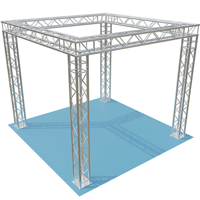 In stockBeamZ P24 Deco - Box Truss System - 3m x 3m x 2.5m£2,620.00
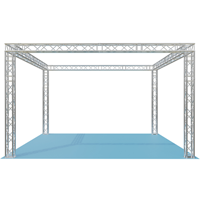 In stockBeamZ P24 Deco - Box Truss System - 5m x 5m x 3m£3,859.99