Truss Lighting Clamps
Every lighting rig, large or small, relies on clamp hardware that keeps fixtures exactly where designers intend. Half couplers, light clamps, and the wider truss clamp family look unassuming but form the backbone of modern touring rigs and permanent installs alike. Selecting the right model, matching its load rating, and fitting it properly ensures a smooth build and consistent focus from the first rehearsal to the final encore.
The Role of a Light Clamp in Rigging
A truss lighting clamp creates a physical bond between a fixture and a truss segment. This simple link transfers weight, controls movement, and allows precise placement. While clamps vary in style, each must achieve three basic goals:
- Grip the truss tube without damaging the alloy.
- Hold the fixture steady through vibration, heat, and repeated focus changes.
- Release easily when crews need to strike or re-hang fixtures.
A well-chosen model minimises setup time and protects valuable lighting gear from knocks or unexpected drops.
Main Truss Clamp Styles at a Glance
No single design suits every scenario, so several options exist.
- Fixed half coupler for general duties.
- Swivel clamp where angled joints are unavoidable.
- Quick-release light clamp for fast turnover jobs.
- Heavy-duty truss clamp to carry moving heads or video panels.
Half Coupler
The half coupler wraps halfway around a tube, tightening with a single bolt or wing nut. Its streamlined body keeps visual clutter low and allows multiple units to sit close together, vital when rigs grow dense with fixtures. Crews favour the half coupler during long tours because it weighs little yet withstands repeated tightening.
Swivel Clamp
Two half couplers linked by a central bolt form a swivel, joining parallel tubes, offset positions, or crossing trusses. Once aligned, a short turn of the spanner locks everything in place.
Quick-Release Light Clamp
Festival crews often face tight changeover slots. A quick-release clamp speeds things along. No separate tool is needed; the clamp locks by hand and stays secure thanks to an internal safety pin.
Heavy-Duty Truss Clamp
Large moving head lights, winches, or LED screens call for greater capacity. Heavy-duty units achieve this with thicker sidewalls and a higher-grade alloy. Load figures exceeding 300kg are typical, yet the clamp footprint remains compact enough for standard ladder or box truss.
Materials and Surface Finishes
Most truss lighting clamps use either aluminium or steel. Aluminium remains popular for touring work - its lower mass reduces flight-case weight and speeds truss climbs. Steel appears in fixed installations where maximum capacity takes priority. Both metals often receive anodised or powder-coat finishes that resist scratches and humidity, protecting threads and improving grip consistency.
Sizing, Thread Options, and Load Ratings
Before ordering, match three critical figures:
- Tubing outside diameter. Some architectural truss systems vary, so a quick measurement avoids headaches on site.
- Safe working load. Add the mass of the fixture, its bracket, and any accessories such as barn doors. Keep well within the published clamp limit.
- Mounting thread. M10 and M12 tapped holes cover most stage lanterns, though certain automated fixtures use bespoke adaptors. Checking this detail ensures a clean fit and correct pivot point.
Typical Uses Beyond Lighting
While primarily linked with lamps, clamps also support:
- Cable management trays that keep power runs tidy.
- Lightweight drape bars and star cloth tracks.
- Special-effect machines such as hazers or smoke machines.
- Small video displays or projection brackets.
Installation Practice
Even seasoned technicians follow a short checklist when fitting a truss clamp:
- Inspect threads, pins, and the body for cracks or burrs.
- Place the clamp so its hinge sits on the truss underside - gravity assists closure rather than urging it open.
- Tighten to the torque figure supplied by the maker. Excess force can deform the tube or strip threads.
- Add an independent safety bond between fixture and truss.
- After focusing, double-check nuts remain seated. Vibrations during transport or showtime may loosen a poorly set clamp.
Keeping Light Clamps in Service
Good maintenance extends life far beyond the warranty. A wipe with a lint-free cloth removes dirt that encourages corrosion. Lightweight oil on hinge pins guards against seizing, though threads should stay dry to prevent accidental loosening. Store clamps in foam-lined boxes; a simple divider stops them knocking together and preserves finish.
Stage Concepts Clamp Range
The Stage Concepts catalogue covers clamps for budget-conscious one-off shows through to hardened touring stock built to withstand daily rigging cycles. Each model lists tube size and load capacity clearly, easing pre-production planning. Most items ship from our on-site warehouse, trimming delivery times and helping tight build schedules remain intact.
Key Points to Remember
- Confirm tube diameter first - an ill-fitting clamp risks slippage.
- Stay within safe working loads; assume nothing, measure everything.
- Choose aluminium for speed, steel for larger weights.
- Always back up the primary clamp with a certified safety wire.


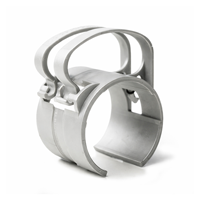 In stockSC Snap Light Truss Clip - Silver£0.79